
Beyond Marine Bands: Deploying IP67 Ruggedized UV Transceivers for Extreme Water Sports and Search & Rescue (SAR) Operations
The Maritime & Inland Water Dilemma: Specialized Marine Radios vs. Tactical Multi-Band Transceivers Whether navigating open oceans for recreational sea kayaking, angling in rough surf, or coordinating high-stakes Search and Rescue (SAR) missions on turbulent inland rivers, reliable wireless communication is the ultimate line of defense. Standard marine VHF radios are legally bound to marine-only channels, isolating water teams from land-based logistics, municipal medical services, and local police repeaters. Conversely, standard consumer-grade radios crumble when exposed to persistent salt spray, swift-water submersions, or violent impacts against rocky banks during emergency deployments.
To bridge this operational gap, mission commanders and extreme water athletes are transitioning to industrial-grade, IP67 waterproof dual-band transceivers capable of unifying maritime channels and terrestrial emergency networks onto a single tactical platform.

Figure 1: IP67 submersion-hardened transceiver operating reliably under heavy water rescue and rough maritime environments.
1. Sealed Against Extreme Submersion: The IP67 Industrial Standard
During wet rescue operations and fast-water sports, water ingress immediately targets typical failure points: dynamic acoustic ports, volume encoder shafts, and charging terminal rails. Industrial-grade IP67 engineering guarantees that the transceiver's housing remains completely sealed against dust, sand, and static water submersion up to 1 meter (3.3 feet) for 30 minutes without allowing any liquid past its high-pressure silicone barrier seals.
To survive high-impact environments—such as wild river rapids, rocky coastal drops, or slamming boat hulls during SAR deployments—heavy-duty tactical transceivers like the VGC VR-N76 feature a high-density die-cast aluminum alloy backbone encased in a shock-absorbing polymer frame. Because of this heavy protective metal chassis, this radio does not float. For offshore, fast-water, or search and rescue deployments, operators must secure the radio body to their PFD, rescue harness, or vessel using a heavy-duty lanyard or locking tether to prevent accidental loss.
This structural durability ensures that even when a responder capsizes or a recreational athlete takes a direct wave hit, the radio remains operational. Following exposure to saltwater or thick river silt, a simple freshwater rinse restores full operation to the mechanical controls and prevents galvanic degradation over the charging pins.
2. High-Stakes Search & Rescue (SAR): Bridging Air, Sea, and Land
In localized disaster relief, flood evacuations, or remote canyon searches, communication bottlenecks cost lives. When water rescue teams on small boats or kayaks cannot talk directly to shore support vehicles, helicopters, or police dispatch networks, the operational response breaks down. Standard marine-only radios are restricted from transmitting on public safety or land mobile bands, creating isolated data islands.
Deploying multi-band UV transceivers on search vessels allows operators to monitor international distress frequencies (such as Marine Channel 16) while actively operating secure tactical, GMRS, or local amateur radio frequencies to communicate directly with incoming air or ground assets. Command staff can quickly patch communications across varying units via the wireless HT APP software interface, reprogramming fleet frequencies in seconds right from a moving vessel on the water.
3. The Offline Compass: Zero-Signal Location Tracking & Wayfinding
Rapid changes in temperature, dense sea fog, or night operations can quickly compromise situational awareness on open water. Traditional mapping terminals and mobile phones are highly susceptible to screen lockouts from moisture and frequently lose cellular connection past the immediate shore.
An advanced smart radio like the VGC VR-N76 features an integrated multi-satellite GNSS receiver paired with a high-accuracy digital electronic compass. This allows SAR teams or extreme athletes to read live latitude/longitude coordinate spreads and navigate toward preset waypoint sectors directly on the high-contrast physical screen—completely independent of cellular grids or satellite internet. Operators can broadcast active positions, track the compass trajectory of adjacent teammates, or safely guide vessels back to shore during zero-visibility operations.

Figure 2: Real-time electronic compass and coordinates delivering persistent navigation data to rescue personnel when land targets are obscured.
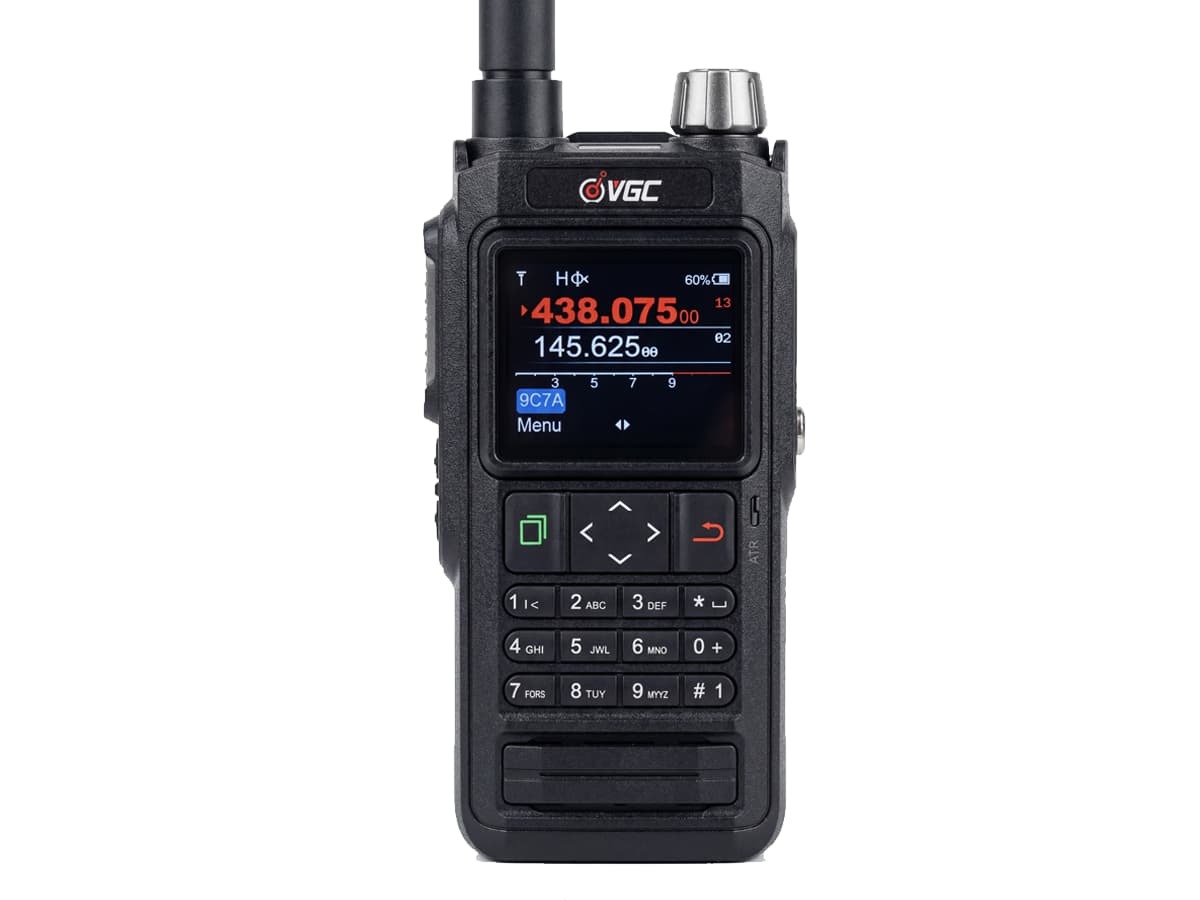
VGC VR-N76 Waterproof Smart Radio
The professional choice for maritime support, extreme water sports, and search & rescue operations. Features IP67 aluminum core framing, internal GPS, electronic compass, and dual Bluetooth data sync. (Lanyard required for offshore use)
Advanced Emergency Response Resources:
Secure Your Maritime Communication Framework
Explore precision waterproof radio networks engineered to maintain absolute line security across extreme marine environments, flood zones, and search operations.
Technical Documentation Database © 2026 | Full-Stack Waterproof Tactical Communication Architecture