
The IP67 Waterproof Trap: Why Most Outdoor Two-Way Radios Fail in Real-World Submersion
When you buy an outdoor walkie talkie stamped with an IP67 waterproof rating, you expect it to survive mud, heavy downpours, and accidental drops into rivers. On paper, the spec promises survival in up to 1 meter of water for 30 minutes. However, thousands of outdoor enthusiasts, overlanders, and emergency operators wake up to foggy screens and fried circuits every year.
Why does certified rugged gear fail when it matters most? The answer lies in a hidden physical phenomenon that laboratory tests often ignore: internal thermal vacuuming.
What does IP67 actually mean?
The "IP" stands for Ingress Protection. For a device like the VR-N76, the numbers break down like this:
- 6: Dust Tight. No ingress of dust; complete protection against contact. Essential for desert overlanding.
- 7: Immersion up to 1m. Protection against water immersion for 30 minutes. If your radio falls into a creek, it survives.
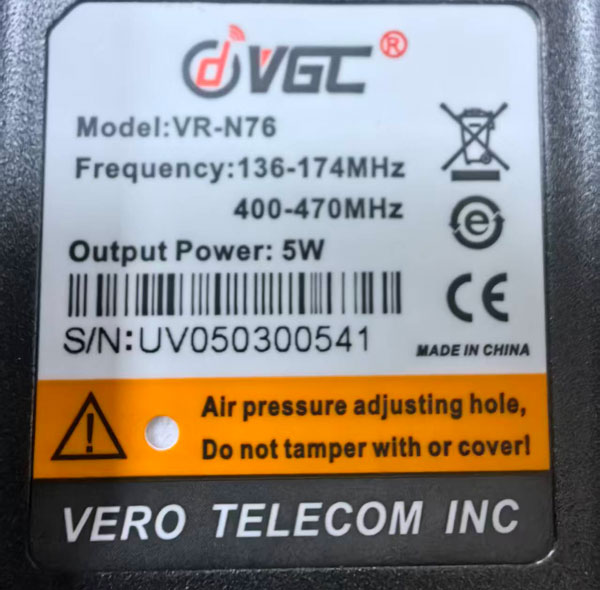
The Vero Tech Standard: In this close-up of the VR-N76 chassis, you can clearly see the official pressure equalization vent. The subtle white layer inside the vent is the specialized ePTFE membrane. This membrane is the core reason our radios can be submerged in water while maintaining the precise internal air pressure required for high-fidelity audio—a critical feature for overlanders and rescue teams in extreme conditions.
⚠️ Industry Secret: How to Spot a "Fake" IP67 Radio
The market is flooded with budget radios claiming an "IP67" rating, but many are purely decorative. As a professional manufacturer, Vero Telecom wants you to know a simple physical check to identify real engineering:
- Look for the Pressure Vent: A truly sealed IP67 radio must have a ventilation hole (usually hidden behind the battery or on the side). Why? Because a sealed device needs to balance internal and external air pressure caused by temperature changes or altitude.
- The "No Vent" Red Flag: If a radio claims to be IP67 but has a completely solid, unvented chassis, it’s a fake. Without a vent, the air pressure would eventually compromise the seals or cause the speaker to fail. You simply cannot pass a professional waterproof test without a pressure relief system.
- Waterproof Membranes: Inside a genuine IP67 vent (like on the VR-N76), there is a specialized ePTFE waterproof-breathable membrane. This high-tech material allows air to pass while blocking every single molecule of water.
Before you buy, ask the seller: "Where is the pressure balance vent?" If they don't know, it's probably not a real waterproof radio.
🛡️ Dual-Channel Protection: Body & Battery Independence
The VR-N76 is engineered for worst-case scenarios. We use a modular waterproofing strategy that covers every potential failure point:
- Independent Sealing: Unlike standard radios where the battery must be attached to maintain the seal, the VR-N76 body and battery are certified waterproof individually. Even if the battery is detached and the unit falls into water, the core electronics remain safe.
- Exposed USB-C? No Problem: Many users worry about the exposed Type-C charging port on the battery. Traditional radios rely on flimsy rubber flaps that easily tear or fall off.
- Waterproof Charging Components: We utilize specialized waterproof USB-C components with internal sealing. Even if water enters the port itself, it is physically blocked from penetrating the battery cells or internal circuitry. It is a true "open-port" waterproof design, offering modern convenience without compromising off-grid reliability.
Pro Tip: After saltwater exposure, simply rinse the Type-C port with fresh water and dry it before charging to ensure long-term durability.
3 Real-World Scenarios Where IP67 Saves the Day
1. The Unexpected River Crossing
You're trekking through a valley and need to cross a knee-deep stream. A slip on a mossy rock sends you—and your gear—into the water. With an IP67 radio like the VGC VR-N76, you don't need to panic. Simply dry the exterior and continue your comms. A non-rated radio would likely short-circuit instantly, leaving you isolated.
2. The "Fine Dust" Nightmare
Overlanders know that dust is more invasive than water. Fine silt can penetrate speaker grills and charging ports, grinding down internal components over time. IP67-rated seals ensure that the "guts" of your radio remain sterile, maintaining audio clarity even after a week in the Sahara or the Moab desert.
3. High-Humidity & Rescue Ops
In Search and Rescue (SAR), operations don't stop for torrential rain. Continuous exposure to high humidity and driving rain can cause fogging inside screens and corrosion on PTT buttons. IP67 construction utilizes high-grade gaskets that keep internal pressure stable, preventing the "internal fogging" that plagues cheaper walkie-talkies.
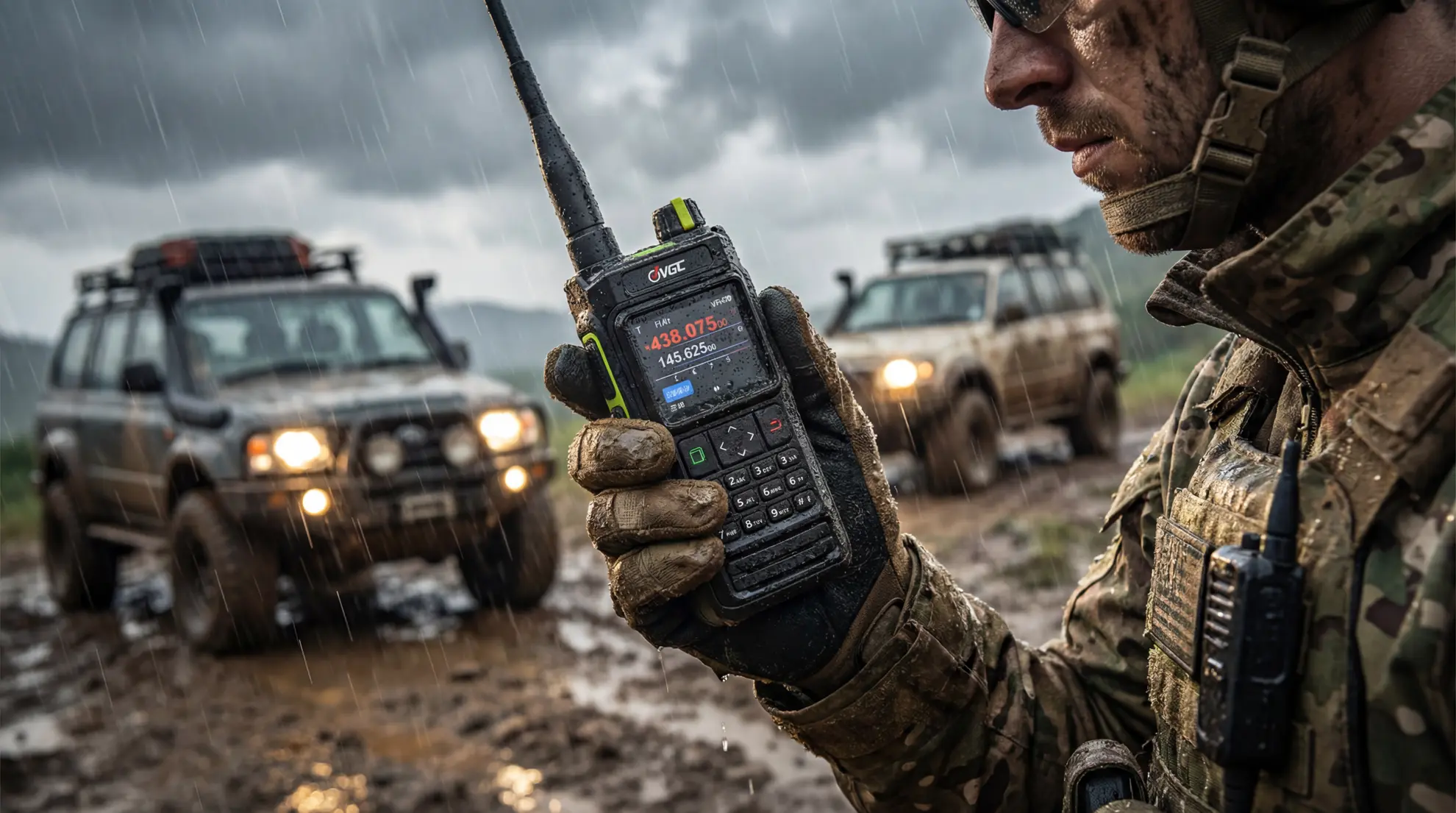
The VR-N76: Built to withstand immersion and extreme dust ingress.
Vero Telecom's Commitment to Ruggedness
Our N-Series ecosystem is designed for the modern adventurer. We don't just focus on Bluetooth connectivity and APRS smart-tracking; we build those advanced features into a shell that can handle the elements.
Impact Resistant
Reinforced chassis for accidental drops on rocky terrain.
Extreme Temps
Operates reliably from freezing summits to desert heat.